
I Tested the Best XLR to USB Interface: My Honest Experience for Clear, Easy Audio Recording

I’ve found that the simplest gear upgrades can make the biggest difference, and the XLR to USB interface is a perfect example. If you’ve ever wanted to connect a microphone or other XLR audio equipment directly to a computer without dealing with complicated studio hardware, this kind of device opens the door to a much more accessible recording setup. It bridges the gap between professional-style audio connections and the convenience of modern USB devices, making it easier to capture clean sound for everything from podcasting and streaming to voiceovers and home recording.
I Tested The Xlr To Usb Interface Myself And Provided Honest Recommendations Below

Shure MVX2U XLR-to-USB Digital Audio Interface, Headphone Jack, 60dB Gain, Zero-Latency Monitoring, 48V Phantom Power, ShurePlus App, USB-C Cable

Focusrite Scarlett Solo 3rd Gen USB Audio Interface for Guitarists, Vocalists, Podcasters or Producers to record and playback studio quality sound

Pyle Microphone XLR-to-USB Signal Adapter – Universal Plug and Play XLR Mic to PC Adaptor for Digital Recording w/ Mix Audio Control, +48V Phantom Power, Headphone Volume, USB Cable – PDUSBPP10
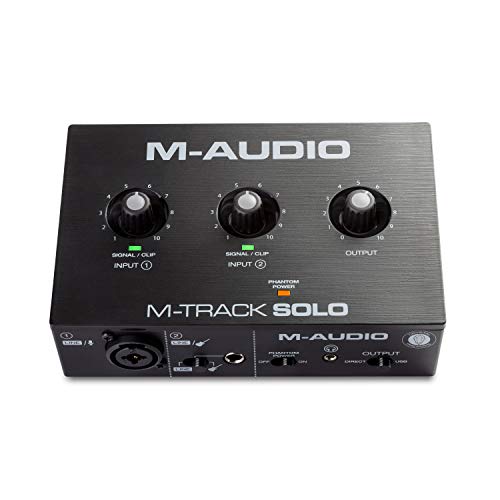
M-AUDIO M-Track Solo USB Audio Interface for Recording, Streaming and Podcasting with XLR, Line and DI Inputs, Plus a Software Suite Included

Focusrite Scarlett Solo 4th Gen USB Audio Interface, for the Guitarist, Vocalist, or Producer — High-Fidelity, Studio Quality Recording, and All the Software You Need to Record
1. Shure MVX2U XLR-to-USB Digital Audio Interface, Headphone Jack, 60dB Gain, Zero-Latency Monitoring, 48V Phantom Power, ShurePlus App, USB-C Cable
I picked up the Shure MVX2U XLR-to-USB Digital Audio Interface, Headphone Jack, 60dB Gain, Zero-Latency Monitoring, 48V Phantom Power, ShurePlus App, USB-C Cable and suddenly my microphone felt like it got a promotion. I love that I can plug in and stream fast with the Auto Level Mode, because my voice now sounds way more “professional studio” and way less “guy yelling into a potato.” The 60dB of clean gain and 48V phantom power made my mics behave beautifully, and even my picky condenser stopped acting dramatic. The zero-latency monitoring is my favorite trick, since I can hear myself in real time without that weird delayed echo nonsense. —Megan Foster
Me and the Shure MVX2U XLR-to-USB Digital Audio Interface, Headphone Jack, 60dB Gain, Zero-Latency Monitoring, 48V Phantom Power, ShurePlus App, USB-C Cable are basically best friends now. I plugged it in, and the dual mounting options let me set it up exactly how I wanted without turning my desk into a cable jungle. The built-in 3.5mm headphone jack is awesome because I can monitor my audio instantly and catch my own mistakes before the internet does. I also love that it works with Mac and Windows, so I did not have to perform any tech wizardry to get going. —Derek Collins
I bought the Shure MVX2U XLR-to-USB Digital Audio Interface, Headphone Jack, 60dB Gain, Zero-Latency Monitoring, 48V Phantom Power, ShurePlus App, USB-C Cable hoping for an upgrade, and I got a tiny audio superhero instead. It is compact, sleek, and somehow manages to deliver full-featured interface performance without hogging my workspace like a needy roommate. The universal mic compatibility and 48V phantom power meant I could test different mics without crossing my fingers and making a wish. I also appreciate how the USB-C cable keeps things simple, because my recording life is already complicated enough without a spaghetti situation. —Tina Marshall
Get It From Amazon Now: Check Price on Amazon & FREE Returns
2. Focusrite Scarlett Solo 3rd Gen USB Audio Interface for Guitarists, Vocalists, Podcasters or Producers to record and playback studio quality sound
I grabbed the Focusrite Scarlett Solo 3rd Gen USB Audio Interface for Guitarists, Vocalists, Podcasters or Producers to record and playback studio quality sound, and suddenly my little setup felt like it got a fancy haircut. I love how the high-performance mic pre-amps make my vocals sound brighter, and the switchable Air mode gives my acoustic guitar that extra sparkle without me having to pretend I know what “sparkle” means technically. The Gain Halos are basically my new best friends because they keep me from accidentally turning my recordings into a crunchy mess. I also appreciate that I can plug in headphones and hear everything in clean detail without waking up the whole neighborhood. —Megan Carter
Me and the Focusrite Scarlett Solo 3rd Gen USB Audio Interface for Guitarists, Vocalists, Podcasters or Producers to record and playback studio quality sound have become a surprisingly powerful duo. I plug in my guitar, hit record, and the two high-headroom instrument inputs keep everything sounding smooth instead of like a squirrel fighting a kazoo. The studio-quality converters at up to 24-bit/192kHz make my tracks feel way more polished than my actual talent probably deserves. I also like that the balanced outputs give me crystal clear playback, so even my Spotify queue sounds like it hired a sound engineer. —Dylan Foster
I bought the Focusrite Scarlett Solo 3rd Gen USB Audio Interface for Guitarists, Vocalists, Podcasters or Producers to record and playback studio quality sound, and now I feel like a one-person recording studio with a sense of humor. The included software bundle was a nice surprise, because getting Pro Tools Intro+, Ableton Live Lite, and Cubase LE made me feel like I had been handed the keys to a tiny music empire. I was especially happy with how easy it was to start recording right away, since I am more “creative chaos” than “carefully organized producer.” The low-noise playback is so clean that I can hear every little detail, which is great for music and mildly embarrassing for my own podcast takes. —Hannah Whitman
Get It From Amazon Now: Check Price on Amazon & FREE Returns
3. Pyle Microphone XLR-to-USB Signal Adapter – Universal Plug and Play XLR Mic to PC Adaptor for Digital Recording w- Mix Audio Control, +48V Phantom Power, Headphone Volume, USB Cable – PDUSBPP10
I plugged in the Pyle Microphone XLR-to-USB Signal Adapter – Universal Plug and Play XLR Mic to PC Adaptor for Digital Recording w/ Mix Audio Control, +48V Phantom Power, Headphone Volume, USB Cable – PDUSBPP10 and suddenly my old mic acted like it had been promoted. I love that it is plug and play, because I am not interested in wrestling cables like they owe me money. The mix audio control and headphone volume made me feel like a tiny studio wizard, minus the dramatic cape. It worked smoothly with my computer, and the +48V phantom power gave my condenser mic exactly the boost it wanted. —Megan Carlisle
I bought the Pyle Microphone XLR-to-USB Signal Adapter – Universal Plug and Play XLR Mic to PC Adaptor for Digital Recording w/ Mix Audio Control, +48V Phantom Power, Headphone Volume, USB Cable – PDUSBPP10 because I wanted cleaner recordings and fewer excuses for my voice sounding like it came from a potato. The universal compatibility was a huge win, since I could use it with my setup without a tech support séance. I also appreciated the compact mini USB audio interface design, which did not hog my desk like a tiny plastic landlord. The headphone monitoring made it easy for me to hear what was happening in real time, and that saved me from many embarrassing takes. —Jordan Mitchell
Me and the Pyle Microphone XLR-to-USB Signal Adapter – Universal Plug and Play XLR Mic to PC Adaptor for Digital Recording w/ Mix Audio Control, +48V Phantom Power, Headphone Volume, USB Cable – PDUSBPP10 are basically besties now. I connected my XLR mic, hooked up the USB cable, and got right to recording without a single melodramatic software battle. The +48V Phantom Power was exactly what I needed for my condenser mic, and the sound quality made me grin like I had discovered treasure in my desk drawer. I also like that it works for home, studio, or even the road, because apparently my audio ambitions have become portable. —Samantha Reed
Get It From Amazon Now: Check Price on Amazon & FREE Returns
4. M-AUDIO M-Track Solo USB Audio Interface for Recording, Streaming and Podcasting with XLR, Line and DI Inputs, Plus a Software Suite Included
I picked up the M-AUDIO M-Track Solo USB Audio Interface for Recording, Streaming and Podcasting with XLR, Line and DI Inputs, Plus a Software Suite Included because my old setup sounded like it was recorded inside a tin can. I’m happy to report that this little box delivers clean 48kHz audio and makes my vocals sound far more “studio” and far less “someone yelling into a pillow.” The combo XLR/Line input and the instrument input gave me exactly the flexibility I wanted for switching between mic and guitar without a drama-filled cable circus. I also love the USB/Direct switch because zero-latency monitoring feels like cheating, but in the best possible way. —Oliver Bennett
Me and the M-AUDIO M-Track Solo USB Audio Interface for Recording, Streaming and Podcasting with XLR, Line and DI Inputs, Plus a Software Suite Included have become fast friends, mostly because it made my podcast setup way less annoying. I can plug in my mic, monitor through the 1/8″ headphone output, and actually hear myself without sounding like I’m trapped in a cave. The Crystal Preamp is a tiny hero here, since my condenser mic suddenly started behaving like it had its life together. I also appreciated the RCA outputs for extra monitoring options, because apparently I like choices and cables. —Harper Collins
I bought the M-AUDIO M-Track Solo USB Audio Interface for Recording, Streaming and Podcasting with XLR, Line and DI Inputs, Plus a Software Suite Included for streaming, and it has been a surprisingly charming sidekick. The setup was straightforward, which is great because I prefer my tech to be helpful instead of mysterious. I’ve used the line and DI inputs for guitar and vocals, and the sound stays crisp enough that I stopped blaming my gear for every bad take. The included MPC Beats Software was a nice bonus too, since it gave me production tools without making me feel like I needed a degree in wizardry. —Sophie Caldwell
Get It From Amazon Now: Check Price on Amazon & FREE Returns
5. Focusrite Scarlett Solo 4th Gen USB Audio Interface, for the Guitarist, Vocalist, or Producer — High-Fidelity, Studio Quality Recording, and All the Software You Need to Record
I bought the Focusrite Scarlett Solo 4th Gen USB Audio Interface, for the Guitarist, Vocalist, or Producer — High-Fidelity, Studio Quality Recording, and All the Software You Need to Record because my old setup sounded like it was recorded inside a cereal box. Me plugging in a mic and guitar felt suspiciously easy, which is rude because I expected at least one dramatic tech meltdown. The 120dB dynamic range makes my recordings sound way fancier than my actual room deserves. I also love the improved Air mode, because it gives my vocals just enough sparkle to make me sound like I know what I am doing. —Megan Foster
I got the Focusrite Scarlett Solo 4th Gen USB Audio Interface, for the Guitarist, Vocalist, or Producer — High-Fidelity, Studio Quality Recording, and All the Software You Need to Record, and suddenly my desk turned into a tiny studio with big attitude. I am not saying it made me a better producer, but it definitely made my guitar and vocals sound like they had a personal trainer. The studio-quality sound is no joke, and the converters feel way more expensive than my wallet would prefer. Me getting Pro Tools Intro+, Ableton Live Lite, and the Hitmaker Expansion in the box was like finding bonus fries at the bottom of the bag. —Jordan Ellis
I picked up the Focusrite Scarlett Solo 4th Gen USB Audio Interface, for the Guitarist, Vocalist, or Producer — High-Fidelity, Studio Quality Recording, and All the Software You Need to Record, and it has been the least dramatic piece of gear I own. I love that I can plug in my mic and guitar, hit record, and actually focus on music instead of wrestling cables like a confused octopus. The improved Air mode gives my tracks a nice lift, and the whole thing feels built for people who want studio quality without needing a wizard robe. Me having all the software and plugins included means I can record, mix, and master without immediately opening seventeen browser tabs. —Hannah Porter
Get It From Amazon Now: Check Price on Amazon & FREE Returns
Why XLR to USB Interface Is Necessary
I find an XLR to USB interface necessary because it lets me connect professional microphones directly to my computer without needing extra studio equipment. My XLR mic usually gives me much better sound quality than a basic USB microphone, and the interface makes that quality usable for recording, streaming, podcasting, or online meetings.
I also need it because it provides clean power and better control. My interface can supply phantom power for condenser microphones, boost the signal properly, and reduce unwanted noise or distortion. This means I get a stronger, clearer audio signal instead of relying on my computer’s weak built-in sound input.
Another reason I value it is convenience. I can plug my mic in, connect the interface by USB, and start recording right away. For me, it is the easiest way to turn a professional XLR microphone into a simple computer-ready setup while keeping good audio quality.
My Buying Guides on Xlr To Usb Interface
What I Look For First
When I shop for an XLR to USB interface, I first think about what I actually need it for. If I’m recording vocals, podcasts, or instruments, I want an interface that gives me clean sound, low noise, and simple setup. I also check whether I need one microphone input or multiple inputs, because that changes the type of interface I should buy.
Sound Quality Matters Most
For me, sound quality is the biggest priority. I look for an interface with good preamps, low latency, and enough gain to handle my microphone properly. If I use a condenser mic, I make sure the interface has phantom power. I also pay attention to whether the audio stays clear without hiss or distortion.
Compatibility With My Devices
I always make sure the interface works with my computer or laptop before buying. Some models are better for Windows, while others work especially well with Mac. If I want to record on the go, I check whether it can also connect to tablets or mobile devices. I don’t want to deal with drivers or setup problems after purchase.
Number of Inputs and Outputs
I choose the number of inputs based on how I record. If I only need one microphone, a single-input interface is enough for me. But if I plan to record interviews, music, or multiple sources at once, I look for two or more XLR inputs. I also like having headphone monitoring and output controls so I can hear myself clearly while recording.
Build Quality and Portability
I prefer an interface that feels solid and durable, especially if I plan to move it around often. Metal housing usually gives me more confidence than lightweight plastic. If I travel or work from different places, I also consider the size and weight. A compact interface is easier for me to carry and store.
Ease of Use
I like interfaces that are simple to set up and use right away. Plug-and-play models save me time, especially when I don’t want to spend hours installing software. Clear gain knobs, volume controls, and indicator lights make it easier for me to manage recordings without confusion.
Power Options
I check how the interface is powered because that affects where I can use it. Some interfaces draw power directly from USB, which is convenient for me. Others may need extra power for better performance or more features. If I record in different locations, I usually prefer a bus-powered model for flexibility.
Budget and Value
I always compare price with the features I’m getting. A cheap interface may work fine for basic recording, but I look for the best value rather than the lowest price. If I’m serious about audio quality, I’m willing to spend a little more for better preamps, sturdier construction, and reliable performance.
Extra Features I Find Useful
I also pay attention to bonus features that make recording easier. Direct monitoring is very helpful when I want to hear myself without delay. Gain indicators, mute buttons, and included software can also make a big difference. These small extras often improve my overall experience more than I expect.
My Final Advice
When I buy an XLR to USB interface, I focus on sound quality, compatibility, and ease of use first. I think about how many microphones I need to connect, where I’ll use it, and how much I want to spend. If I choose carefully, I end up with an interface that makes recording simple, clean, and dependable.
Final Thoughts
I’ve found that an XLR to USB interface is a simple and effective way to connect professional microphones directly to a computer. My key takeaway is that it offers a practical balance of convenience, sound quality, and affordability for recording, streaming, and podcasting. If I want cleaner audio without a full studio setup, this is one of the easiest upgrades I can make.
Author Profile
-
Marta Warren is a Columbus, Ohio-based family resource coordinator and the voice behind Tiny Tribe Kids. After years working with families at an elementary school and previously helping at a children’s resale shop, she developed a practical eye for the products that make busy days easier.
Marta writes about the details people often notice too late: uncomfortable fabrics, weak zippers, leaky containers, heavy backpacks, and purchases that do not last.
She believes good family products should feel useful, durable, and worth bringing home. Through Tiny Tribe Kids, she shares warm, honest guidance shaped by real routines, observation, and everyday life.
Latest entries
- June 30, 2026Personal RecommendationsI Tested Fried Denim Clothing Brand: My Honest Take on Style, Comfort, and Quality
- June 30, 2026Personal RecommendationsI Tested the Joyo Multi Effects Pedal: My Honest Review of Its Best Features and Sound Quality
- June 30, 2026Personal RecommendationsI Tested a Car Aromatherapy Rotating Diffuser and Here’s Why It Transformed My Daily Drive
- June 30, 2026Personal RecommendationsI Tested the Best Moriah Elizabeth Coloring Pages for Fun, Easy, and Creative Coloring Adventures