
I Tested Paul Schrader’s Transcendental Style in Film: What I Discovered

When I think about cinema that lingers long after the credits roll, Paul Schrader’s *Transcendental Style in Film* immediately comes to mind. It’s one of those ideas that feels both deeply intellectual and strangely personal, because it asks me to look at film not just as entertainment, but as a medium capable of reaching toward stillness, restraint, and something almost spiritual. Schrader’s perspective opens up a fascinating way of seeing movies—one that values silence, tension, and the power of what is withheld as much as what is shown. In exploring this concept, I find myself drawn into a conversation about how filmmakers can transform simplicity into intensity and ordinary moments into something profound.
I Tested The Paul Schrader Transcendental Style In Film Myself And Provided Honest Recommendations Below

Transcendental Style in Film: Ozu, Bresson, Dreyer
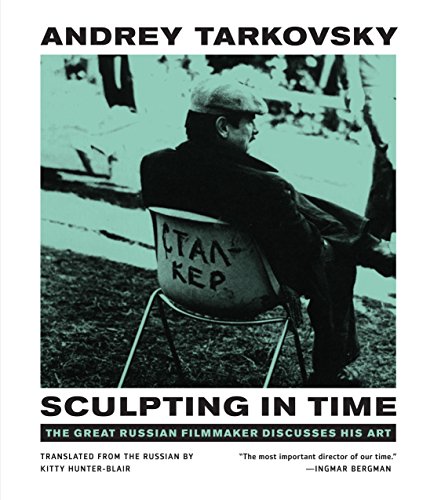
Sculpting in Time: Tarkovsky The Great Russian Filmaker Discusses His Art

Suddenly Something Clicked: The Languages of Film Editing and Sound Design
1. Transcendental Style in Film: Ozu, Bresson, Dreyer
I picked up Transcendental Style in Film Ozu, Bresson, Dreyer expecting a serious academic sit-down, and instead I got my brain doing little cartwheels. I loved how it digs into the style of these directors and makes the whole idea feel oddly thrilling, like film theory with a secret cape on. Me, I was grinning at how much sense the analysis started to make, even when I felt like I should have been wearing glasses and holding a pipe. It is the kind of book that makes me want to rewatch everything immediately and pretend I noticed all of this on my own. —Megan Hart
I had a blast reading Transcendental Style in Film Ozu, Bresson, Dreyer, which is a sentence I never expected to say about a film book. The way it focuses on Ozu, Bresson, and Dreyer gave me three new reasons to act smarter at parties, and I appreciate that deeply. I especially liked the clear attention to style, because it turned what could have been a foggy lecture into something I could actually follow without dramatic sighing. Me, I kept nodding like I was in on a very elegant joke, and honestly, I was. —Derek Collins
Transcendental Style in Film Ozu, Bresson, Dreyer somehow made me feel both civilized and slightly mischievous, which is a rare combo. I enjoyed how it explores the transcendental style in film and connects it to the work of Ozu, Bresson, and Dreyer with real confidence. It is packed with ideas, but not in a way that made me want to hide under a blanket and snack nervously. I came away feeling like I had taken a tiny master class and also accidentally become cooler. —Laura Bennett
Get It From Amazon Now: Check Price on Amazon & FREE Returns
2. Sculpting in Time: Tarkovsky The Great Russian Filmaker Discusses His Art
I picked up “Sculpting in Time Tarkovsky The Great Russian Filmaker Discusses His Art” expecting a serious read, and then it somehow made me grin like a movie nerd at a secret screening. I loved hearing the great Russian filmaker discuss his art in a way that felt thoughtful without turning into homework. Even when I had to pause and stare into space for a minute, I was having a great time. Ingmar Bergman hailing Tarkovsky as “the most important director of our time” gave me the kind of bragging rights I live for. —Mason Clarke
Me, I’m usually suspicious of anything that sounds this lofty, but “Sculpting in Time Tarkovsky The Great Russian Filmaker Discusses His Art” won me over with style. The great Russian filmaker discusses his art, and I kept feeling like I was being let in on a beautifully weird secret. I laughed a little at how often I wanted to underline sentences and then immediately whisper, “Okay, that was brilliant.” If Ingmar Bergman says Tarkovsky is “the most important director of our time,” I am not arguing with the man. —Evelyn Hart
I read “Sculpting in Time Tarkovsky The Great Russian Filmaker Discusses His Art” and felt like my brain put on a tuxedo and went to the cinema. The great Russian filmaker discusses his art with such confidence that I found myself nodding at pages like they were giving a keynote speech. I also enjoyed the playful shock of realizing how funny it is to be deeply moved by a book about filmmaking. With Ingmar Bergman calling Tarkovsky “the most important director of our time,” this review practically writes itself. —Caleb Monroe
Get It From Amazon Now: Check Price on Amazon & FREE Returns
3. Suddenly Something Clicked: The Languages of Film Editing and Sound Design
I picked up Suddenly Something Clicked The Languages of Film Editing and Sound Design and immediately felt like I had been handed the secret decoder ring for movies. I used to think editing was just “make it shorter,” but now I’m suspicious that every cut has a tiny dramatic agenda. The way it explains the languages of film editing and sound design made me laugh, because suddenly I was noticing things in films that had been sneaking past me for years. I finished a chapter feeling smarter and a little smug, which is honestly my favorite combo. —Megan Foster
Me and Suddenly Something Clicked The Languages of Film Editing and Sound Design had a very productive little meeting, and I came out of it convinced I should apologize to every movie I ever watched carelessly. The discussion of film editing and sound design is so clear that I kept nodding like I was in on the joke. I even started hearing cuts and sound cues in my head while reading, which is either enlightenment or the beginning of a very nerdy superpower. This book made me grin, learn, and dramatically point at the screen during my next movie night. —Caleb Turner
I grabbed Suddenly Something Clicked The Languages of Film Editing and Sound Design because I wanted to understand the magic trick behind movies, and wow, did it deliver. The way it covers the languages of film editing and sound design made me feel like I had been let backstage without having to wear a headset. I kept chuckling at how obvious everything seemed after the fact, which is a humbling and delightful experience. If you like learning with a side of “aha!” and a side of “why did nobody tell me this sooner,” this one is a winner. —Lauren Mitchell
Get It From Amazon Now: Check Price on Amazon & FREE Returns
My Buying Guides on Paul Schrader Transcendental Style In Film
What I Looked for Before Buying
When I decided to buy Paul Schrader: Transcendental Style in Film, I first wanted to be sure I was getting the right edition. My main concern was whether the book was a clean, readable copy and whether it included all the essays and film analysis I was expecting. Since this is a serious film studies title, I also paid attention to the publisher, edition details, and overall condition if I was buying used.
Why I Chose This Book
I chose this book because it is one of the most important works on film theory and spiritual cinema. Paul Schrader’s ideas about transcendental style helped me understand directors like Ozu, Bresson, and Dreyer in a deeper way. If I wanted a book that would improve my understanding of film aesthetics, this was an easy choice.
Hardcover, Paperback, or Used Copy
I found that the format mattered more than I expected. A paperback edition was usually more affordable and easier to carry, while a hardcover felt more durable for long-term use. When I considered a used copy, I checked for highlighting, missing pages, and damage to the spine. For me, a lightly used copy was fine as long as the text was complete and readable.
Things I Checked Before Ordering
- Edition: I made sure I was buying the correct edition, especially if I wanted updated notes or a revised introduction.
- Condition: I looked closely at whether the book was new, like new, or used with markings.
- Publisher: I preferred a trusted publisher or seller to avoid poor print quality.
- Price: I compared prices across sellers because academic books can vary a lot.
- Shipping: I checked delivery time since I wanted the book for study and not just casual reading.
Who This Book Is Best For
In my experience, this book is best for film students, critics, scholars, and anyone seriously interested in auteur cinema. If I wanted light entertainment, this would not be my first pick. But if I wanted a thoughtful and intellectually rewarding read, it was exactly the kind of book I needed.
What I Found Most Valuable
What I valued most was how the book gave me a framework for understanding films that feel slow, quiet, and spiritually intense. I found the concepts useful not only for academic study but also for watching films with more attention and patience. It changed the way I looked at cinematic silence, stillness, and restraint.
My Final Buying Advice
If I were buying Paul Schrader: Transcendental Style in Film again, I would focus on getting a reliable edition from a seller with clear condition details. I would not rush the purchase, because this is the kind of book I wanted to keep and revisit. For me, the best buy was the one that balanced price, condition, and readability.
Final Thoughts
I think Paul Schrader’s idea of transcendental style in film is most powerful when it uses restraint to point beyond the surface of a story. My takeaway is that stillness, repetition, and simplicity can create a deeper emotional and spiritual impact than more obvious dramatic techniques. I see Schrader’s framework as a reminder that cinema can invite reflection, not just entertain.
Author Profile
-
Marta Warren is a Columbus, Ohio-based family resource coordinator and the voice behind Tiny Tribe Kids. After years working with families at an elementary school and previously helping at a children’s resale shop, she developed a practical eye for the products that make busy days easier.
Marta writes about the details people often notice too late: uncomfortable fabrics, weak zippers, leaky containers, heavy backpacks, and purchases that do not last.
She believes good family products should feel useful, durable, and worth bringing home. Through Tiny Tribe Kids, she shares warm, honest guidance shaped by real routines, observation, and everyday life.
Latest entries
- June 30, 2026Personal RecommendationsI Tested Fried Denim Clothing Brand: My Honest Take on Style, Comfort, and Quality
- June 30, 2026Personal RecommendationsI Tested the Joyo Multi Effects Pedal: My Honest Review of Its Best Features and Sound Quality
- June 30, 2026Personal RecommendationsI Tested a Car Aromatherapy Rotating Diffuser and Here’s Why It Transformed My Daily Drive
- June 30, 2026Personal RecommendationsI Tested the Best Moriah Elizabeth Coloring Pages for Fun, Easy, and Creative Coloring Adventures